

Using a mechanical coffee harvester for Arabica or Conilon coffee can significantly enhance profitability by reducing labor costs and ensuring optimal ripeness during harvesting.
Using a mechanical coffee harvester for Arabica or Conilon coffee can significantly enhance profitability by reducing labor costs and ensuring optimal ripeness during harvesting.
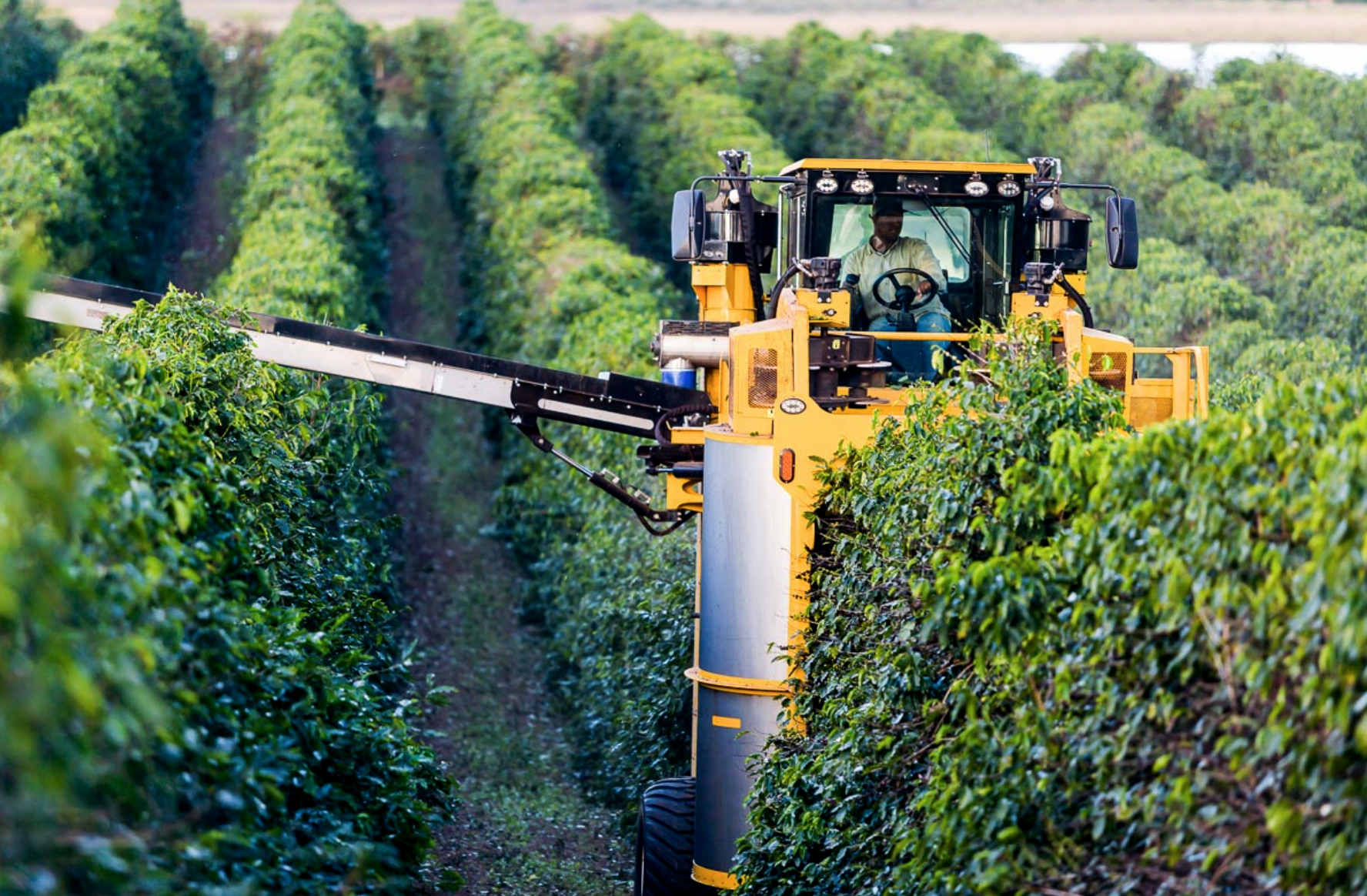
Using a mechanical coffee harvester for Arabica or Conilon coffee can significantly enhance profitability by reducing labor costs and ensuring optimal ripeness during harvesting. The Oxbo 9240+ model, capable of harvesting at speeds of up to .5 hectares per hour, can greatly streamline the process. However, to maximize the efficiency of mechanical harvesting, it’s crucial to properly set up your field. Here are some essential guidelines:
Ensure there is sufficient headland space for the harvester to maneuver effectively. Oxbo recommends a minimum of 8 meters of clear headland space, free from obstacles. However, the machine can operate with headlands as short as 6 meters.
Plant rows should be spaced 3 meters apart to allow for smooth operation of the harvester.
While a coffee harvester can handle trees in pivots, for optimal coffee retention, ensure that trunks are aligned in a straight line rather than off-center.
Prune trees to remove low-lying branches, promoting an upright plant structure that facilitates thorough harvesting. The Oxbo 9240+ is equipped with low-profile nose cones and lifters to manage low-lying branches effectively.
Avoid planting on steep terrain, opting for grades of 15% or less to optimize harvester performance. While the Oxbo 9240+ can manage fields with a 20% side grade thanks to its 61cm lift capacity, smoother terrain enhances efficiency.
For further details, contact your Oxbo representative by filling out the form below. Proper field setup is essential for maximizing the benefits of mechanical coffee harvesting, and following these guidelines can significantly improve your operation’s efficiency and profitability.